
Commodities: The Market Where Supply Is a Physical Fact

From the fuel powering transportation to the metals used in technology and infrastructure, commodities sit at the foundation of economic activity.

The instrument

A commodity price is a running settlement between what exists and what is wanted.


Their prices respond to a distinctive combination of supply, demand, production, weather, inventories and geopolitical developments.

Every one of those is physical. A field floods, a refinery shuts for maintenance, a shipping lane closes, a storage tank fills – and the price answers long before any of it reaches an analyst.

Three sectors

Energy, metals and agriculture keep three different clocks.


They are grouped together because they are physical, not because they behave alike. Each answers to a calendar of its own.

Energy

Follow markets such as oil and other available energy instruments, where production decisions, storage levels and transport routes set the balance.

Metals

Where available, markets linked to gold, silver and other metals, where industrial demand pulls against a store-of-value bid.

Agricultural markets

Where available, monitor commodities influenced by harvests, weather and global demand – markets answering to a growing season rather than a production decision.

The balance

Supply answers a price signal in years. Demand answers in weeks.


Commodity markets can react quickly when the balance between supply and demand changes.

Understanding that balance is central to understanding the market.
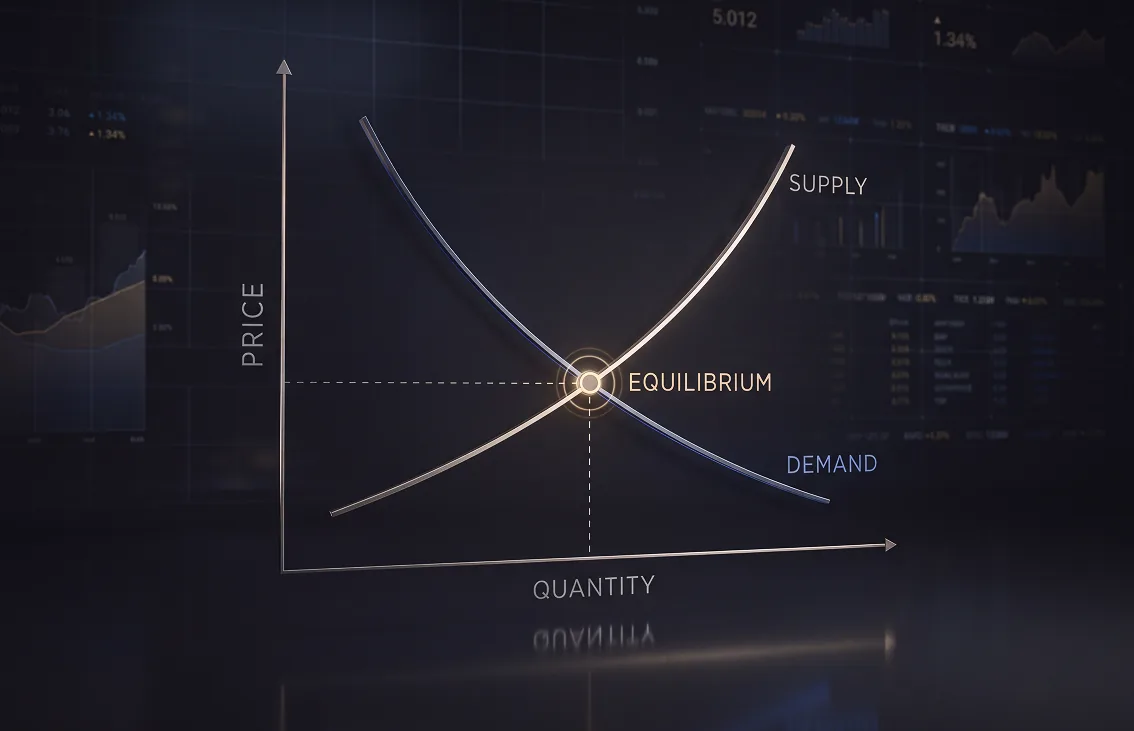
A mine, a well or a growing season cannot be brought forward because the price moved this morning, while consumption can change inside a single quarter. That mismatch is why a commodity price can travel a long way before the physical world responds to it at all.

Inventories absorb the difference in the meantime. That is why storage and stock figures are read as closely as production itself, and why a number about a warehouse can move a market.

Before you trade it

Physical markets produce sudden prices.


Weather, an unplanned outage, an export restriction or a decision by a producer group can reprice a commodity within a session, and none of it arrives on a schedule you can read in advance.

Where an instrument is priced from a futures contract, expiry and the move between delivery months matter. A position held into that window can be affected by the difference between one month and the next, independently of any view on the commodity itself.

Positions are generally held on margin, so a move that looks small against the commodity is a much larger move against the capital committed to it. Where stop orders are available they limit that exposure without removing it: a gap can open straight past the level requested.

Keep reading

A commodity price is always quoted in a currency.


Two of the pages next to this one cover the other half of that quote. The third covers what to decide before the quote matters at all.

Next step

Commodities sit in the same trading environment as the currencies they are priced in.


Online registration is not open on this site yet. Enquiries go through the support page in the meantime.

Enquire About an Account

Trading involves risk of loss. The risk disclosure is not yet published; the standardised risk warning is shown at the foot of every page.